Sustainability · 2025
In this section46 topics
- Sustainability Policy2 items
- Sustainability Goals & UN SDGs3 items
- Policy Review3 items
- Business Value Chain1 item
- Stakeholder Analysis1 item
- Environmental Policy & Guidelines3 items
- Environmental Policy Review1 item
- Energy — Plan & Guidelines2 items
- Energy — Electricity Consumption1 item
- Energy — Fuel Consumption1 item
- Energy — Targets1 item
- Energy — Performance & Outcomes1 item
- Water — Plan & Guidelines2 items
- Water — Withdrawal, Discharge & Consumption1 item
- Water — Targets1 item
- Water — Performance & Outcomes2 items
- Waste — Plan & Guidelines2 items
- Waste — Generation, Disposal & Recycling1 item
- Waste — Targets1 item
- Waste — Performance & Outcomes1 item
- GHG — Plan & Guidelines1 item
- GHG — Emissions1 item
- GHG — Emissions Verification1 item
- GHG — Targets1 item
- GHG — Performance & Outcomes1 item
- Environmental Legal Incidents1 item
- Social Policy & Guidelines4 items
- Social Policy Review1 item
- Human Rights Due Diligence2 items
- Employees — Plan & Guidelines3 items
- Employees — Workforce1 item
- Employees — Remuneration & Provident Fund1 item
- Employees — Training & Development1 item
- Employees — Occupational Health & Safety1 item
- Employees — Labour Relations1 item
- Employees — Employee Representation2 items
- Employees — Targets1 item
- Employees — Performance & Outcomes2 items
- Customers — Plan & Guidelines2 items
- Customers — Satisfaction Results1 item
- Customers — Targets1 item
- Customers — Performance & Outcomes2 items
- Community & Social — Plan & Guidelines2 items
- Community & Social — Targets1 item
- Community & Social — Performance & Outcomes2 items
- Law Violation Incidents1 item
Sustainability Policy
Has a Sustainability Policy
Yes
Policy Description
WSOL is a Thai-operated technology company founded by Thai entrepreneurs. The Company began its journey by providing top-up kiosk services and subsequently expanded its business to meet the evolving needs of Thai consumers in the modern era. WSOL has transformed traditional service models into an integrated B2B2C ecosystem by combining financial solutions, retail service points, and digital technologies. This integrated approach supports the collective growth of partners, franchisees, and entrepreneurs within the Company’s comprehensive B2B2C ecosystem, which is structured around three core business groups:
Financial and Payment Solutions Business Group
B2B Solutions Business Group
B3C Solutions Business Group
The Company recognizes the importance of conducting business sustainably to ensure efficient operations and foster long-term, shared growth across the Group. WSOL is committed to creating maximum value for all stakeholders, including customers, entrepreneurs, employees, investors, shareholders, creditors, and other relevant parties.
Accordingly, the Company has developed a robust ecosystem that enables secure and convenient transactions—whether in purchasing goods or making payments—while maintaining a balanced approach to economic, social, and environmental responsibilities. All operations are carried out with integrity, fairness, transparency, and due consideration for the interests of every stakeholder.
Corporate Social Responsibility Policy
The Group conducts its business operations under a robust corporate governance framework, emphasizing transparency, accountability, and verifiability. The Company is firmly committed to advancing its business in parallel with fostering a balanced integration of economic, social, and environmental considerations. The Group aspires to be a Good Corporate Citizen, serving as a responsible role model in society by conducting business sustainably and achieving stable, long-term growth. This commitment is grounded in ethical principles and good corporate governance practices. At the same time, the Company remains dedicated to maintaining its financial discipline, including fulfilling obligations to creditors and delivering appropriate returns to shareholders efficiently. In pursuing these objectives, the Group carefully considers the impacts of its operations on all stakeholders across every dimension, ensuring that business growth aligns with responsible and sustainable development.
Stakeholder Analysis Across the Business Value Chain
The Company places significant importance on stakeholder management throughout its entire business value chain. Such management encompasses both parties who are affected by, and those who may influence, the Company’s operations. The objective is to ensure that stakeholders are treated equitably and in alignment with the Company’s mission to create sustainable shared value for society. Driven by its commitment to developing diverse products, services, and investment innovations that respond to the needs of all sectors, the Company systematically reviews activities and operational processes across the value chain to address the interests of both internal and external stakeholders. In addition, the Company actively engages stakeholders through multiple communication channels, both online and offline, to gather feedback, expectations, and concerns. These inputs are carefully analyzed to ensure appropriate and responsive actions.
In 2025, the Company identified nine key stakeholder groups, namely: employees; suppliers (contractors/vendors); customers; investors/shareholders; business partners; creditors/capital providers; regulatory authorities; communities and society; and the media. Further details regarding the Company’s policies and operational approaches can be found in Section 3.2 of the 2025 Form 56-1 One Report under the topic “Management of Stakeholder Impacts Across the Business Value Chain.”
Materiality Assessment for Sustainable Development
The Company has established a structured process for assessing material sustainability topics in alignment with the GRI Standards issued by the Global Reporting Initiative (GRI). This process is designed to identify issues that are material to the Company’s economic, social, and environmental impacts, as well as those that may influence the assessments and decision-making of stakeholders across the business value chain. The materiality assessment is conducted to review changes in key sustainability issues relevant to both the organization and its stakeholders, enabling the Company to manage such matters effectively and strategically. The assessment process consists of three key steps:
1. Identification of Material Topics
The Company identifies and analyzes sustainability issues relevant to its business operations, covering economic, social, and environmental dimensions. Consideration is given to applicable international standards, regulatory requirements, and recognized best practices, ensuring alignment with the Company’s sustainability context and stakeholder expectations. The scope of sustainability topics is determined based on impacts arising throughout the value chain, encompassing both internal operations and external stakeholders.
2. Prioritization and Assessment of Significance
Each identified sustainability topic is assessed based on its potential risks and opportunities, as well as its impact on the Company’s value creation across economic, social, and environmental dimensions. The evaluation also considers the level of stakeholder interest, the magnitude of impacts, and the significance of each issue to key stakeholder groups.
3. Validation and Approval of Assessment Results
The results of the materiality assessment are reviewed for accuracy and completeness by the designated working team before being submitted to senior management for consideration, review, and formal approval of the Company’s material sustainability topics. Based on the assessment outcomes, the Company has categorized its material sustainability issues into three main groups, covering Environmental, Social, Economic, and Governance (ESG) dimensions, to establish clear management approaches and strategic direction going forward.
Economic and Governance Dimension
Corporate Governance and Risk Management
Crisis Management
Business Innovation for Social and Environmental Impact
Customer Relationship Management
Supply Chain Management
Environmental Dimension
Climate Change Strategy
Social Dimension
Fair Labor Practices and Respect for Human Rights
Human Capital Development
Occupational Health and Safety
Community Engagement
Sustainability Goals & UN SDGs
Has Sustainability Goals
Yes
Goals Description
The Company is committed to becoming a technology leader with a mission to enhance trust and sustainability for all stakeholders. As a key participant in the business ecosystem, the Company has established sustainability strategies and operational directions aligned with the United Nations Sustainable Development Goals (UN SDGs). This framework strengthens the Company’s capabilities and supports its long-term ambition to become a future leader in financial technology. The key strategic directions are outlined as follows:
Economic and Governance Dimension
1. Strengthening Governance Mechanisms and Organizational Transparency
Operational Targets
Strict compliance with applicable laws and corporate governance regulations
Active stakeholder participation in the Company’s sustainable development
Zero stakeholder complaints
SDGs Supported
SDG 16: Peace, Justice and Strong Institutions
2. Enhancing Risk Management and Internal Control Systems
The Company prioritizes risk identification, assessment, prioritization, and appropriate mitigation measures across the organization.
Operational Targets
Enterprise-wide implementation of risk management systems
Risk management training for employees and personnel
Confidential data protection training
Zero personal data protection violations
SDGs Supported
SDGs 3, 8, 9, and 16
3. Leveraging Advanced Technology in Business Models to Create Social and Environmental Value
The Company integrates advanced technologies into its business models to enhance efficiency and create shared value.
Operational Targets
Investment in research and innovation to improve product and service efficiency
Development of inclusive products and services for underserved groups
SDGs Supported
SDGs 8, 9, and 12
4. Utilizing Customer Satisfaction to Improve Products, Services, and Operations
Operational Targets
Continuous improvement in overall customer satisfaction
Timely response to customer needs and expectations
SDGs Supported
SDGs 8, 9, and 12
5. Strengthening Value Chain Management with ESG Considerations and Business Ethics
Operational Targets
Business partners strictly comply with laws and regulations
Human rights risk assessment of suppliers
ESG-based evaluation of suppliers and business partners
SDGs Supported
SDGs 8, 9, and 12
Environmental Dimension
1. Addressing Climate Change and Efficient Resource Management
Operational Targets
Reduction in electricity consumption
Increased use of recyclable materials to reduce electronic waste
Employee participation in energy-saving and waste management initiatives
SDGs Supported
SDGs 3, 12, and 13
Social Dimension
1. Strengthening Human Rights Mechanisms Across the Value Chain
Operational Targets
Zero human rights violations throughout the value chain
SDGs Supported
SDGs 3, 8, and 16
2. Fair Compensation and Equal Access to Training
Operational Targets
Increased employee engagement
Reduced employee turnover rate
Competitive and performance-based compensation
Promotion of employee access to training and skill development
SDGs Supported
SDGs 3, 8, and 16
3. Enhancing Quality of Life and Workplace Safety
Operational Targets
Support employee well-being and work-life quality
Reduce workplace accidents and fatalities
Provide safety training for business partners before operations
Conduct employee engagement surveys
SDGs Supported
SDGs 3, 8, and 16
4. Maintaining Positive Community Relations and Minimizing Social Impact
Operational Targets
Support local employment
Maintain and enhance community satisfaction levels
Support community and social investment initiatives
SDGs Supported
SDGs 8 and 12
Overall Sustainability Management
The Company conducts its business under the principles of good corporate governance, transparency, and accountability. It is committed to balancing economic growth with social and environmental responsibility. The Company strives to be a responsible corporate citizen by conducting business ethically, ensuring sustainable growth, and creating long-term value for stakeholders across its entire value chain. Continuous consideration is given to the impacts of operations on all stakeholders.
1. Economic and Governance Performance
1.1 Corporate Governance
The Company firmly believes that good corporate governance enhances sustainable performance and is fundamental to achieving long-term success. Governance practices ensure transparency, ethical conduct, and strict legal compliance.
The Company has adopted the Corporate Governance Code for Listed Companies (2017) as its guiding framework, covering governance structure, Board responsibilities, executive accountability, and transparent management principles.
Targets
Short-term
Employee training on good corporate governance
Long-term
Zero operational disputes
Zero stakeholder complaints
Performance
No cyberattack incidents
No customer data leakage
1.2 Anti-Corruption
The Group is firmly committed to conducting its business with integrity, transparency, and accountability toward society and all stakeholder groups, in accordance with the principles of good corporate governance and the Group’s Code of Business Conduct. With a view to creating sustainable value alongside society through the fair and equitable protection of stakeholders’ interests, the Group has established an Anti-Corruption Policy and related guidelines applicable to the entire Group and all relevant units. Under this Policy, directors, executives, and employees are strictly prohibited from demanding, engaging in, or accepting any form of corruption, whether directly or indirectly, in all circumstances, including actions intended to benefit themselves, their family members, friends, or associates. The Group also conducts regular reviews and assessments of compliance with this Anti-Corruption Policy to ensure its continuous improvement and alignment with evolving business conditions, rules, regulations, and applicable laws.
To ensure effective implementation, the Group has clearly defined the roles and responsibilities of the relevant parties as follows:
The Board of Directors
Establish governance policies to ensure that the anti-corruption system operates effectively.
Monitor the implementation of anti-corruption measures to ensure that management recognizes and upholds the importance of preventing corruption.
Foster and embed anti-corruption values as part of the corporate culture across the Group to ensure adherence to the Anti-Corruption Policy.
The Executive Committee
Review the Policy to ensure alignment with changes in business operations, regulations, and applicable laws.
Approve proposed amendments and enhancements prior to submission to the Board of Directors for consideration and approval.
Provide constructive opinions and recommendations for the development of action plans and the effective implementation of anti-corruption measures.
The Audit Committee
Review the financial reporting and accounting systems, internal control systems, and other relevant processes relating to anti-corruption measures to ensure that the operations of various units are efficient, lawful, compliant with established procedures, and aligned with international standards and recognized ethical practices.
The Risk Management Committee
Establish strategies, structures, and resource allocation frameworks for effective risk management.
Assess, measure, and monitor risk management performance, taking into consideration anti-corruption measures.
Management
Implement this Policy by communicating and promoting awareness and understanding among employees at all levels and all relevant parties, ensuring that duties are performed free from corruption.
Encourage and support the adoption and appropriate application of this Anti-Corruption Policy and measures throughout the Group.
Implement the recommendations and guidance provided by the Board of Directors and/or relevant subcommittees.
Regularly review the appropriateness of systems and measures and report any identified issues or concerns to the Board of Directors and/or relevant subcommittees in accordance with their respective roles and responsibilities.
1.3 Whistleblowing Policy
Employees and stakeholders may report suspected corruption anonymously by mail to:
Chairman of the Audit Committee
238 Bangkhunthian-Chaitalay Road
Samaedam, Bangkhunthian
Bangkok 10150
In this regard, the Group shall ensure fairness to whistleblowers and strictly enforce protective measures for individuals who report or cooperate in reporting corruption, in accordance with the relevant policies, regulations, and operational guidelines. The Group shall not demote, discipline, penalize, or impose any adverse consequences on whistleblowers at any level. Furthermore, no complaint shall be disregarded or dismissed, even if such complaint may result in the Group foregoing certain business opportunities.
Targets
Short-term
Formal anti-corruption policy implementation
Declaration of intent to join Thailand’s CAC initiative
Anti-corruption risk assessments across operations
Long-term
Zero corruption incidents
Performance
No corruption cases identified
2. Risk and Crisis Management
Risk management constitutes a critical mechanism for identifying emerging risks and potential issues that may affect the Company. Effective risk management, supported by appropriate mitigation measures, is a key driver in enabling the organization to achieve its strategic objectives while creating shared value for all stakeholder groups.
In this regard, the Board of Directors recognizes the importance of comprehensive risk management and ensures that risk assessments are conducted to cover internal factors, external factors, and potential events that may impact the Company. An annual risk management plan is also established to prevent or mitigate potential adverse effects on business operations to an acceptable level. To ensure effective implementation, the Board of Directors has appointed a Risk Management Committee to oversee the Group’s risk management framework. Management is assigned to report risk management progress on a regular basis. The Audit Committee considers the results of risk management together with the Group’s operational performance reports and the evaluation of the internal control system, thereby enhancing stakeholders’ confidence that the Group maintains risk management at an acceptable and appropriate level.
Targets
Short-term
Risk management training
Long-term
Integration of ESG into risk management
Risk management models implemented across business units
3. Cybersecurity and Data Protection
In light of rapid technological advancement and continuous digital transformation, cybersecurity has become critically important to the Company. As the Company primarily operates its businesses through Cloud Computing platforms—including Top-Up Kiosks, WSOL Solution, WSOL Digital, Prompt Vending, Prompt Speed Commerce, and other digital services—any cyberattack could have a direct and significant impact on the Company, both financially and non-financially. Such impacts may include financial losses as well as reputational damage and loss of customer confidence, potentially leading to a decline in the customer base.
Cybersecurity risks may arise from unauthorized access to or disclosure of users’ data, system disruptions that prevent consumers from accessing products and services, and potential financial losses incurred by users within the system, among other threats. To address these risks, the Company continuously develops the capabilities of personnel in relevant departments to ensure they possess the knowledge and skills necessary to effectively respond to cyber threats. The Company also regularly invests in advanced tools and system enhancements to prevent increasingly sophisticated or previously unknown cyber threats, thereby reinforcing user confidence.
Furthermore, the Company has established comprehensive and effective cybersecurity risk identification and mitigation measures to serve as a framework for managing cyber threats. These include Threat Prevention measures and Timely and Effective Threat Response protocols. Such measures apply across all levels of the organization, from the Board of Directors and executives to employees and subsidiaries, ensuring a robust and organization-wide approach to cybersecurity governance.
Targets
Short-term
Establishment of a Cybersecurity Committee
Cybersecurity and data protection training
Cyber risk assessment
Long-term
Reduction of cyber incidents
Zero stakeholder data breaches
Performance
No cyberattack incidents
No customer data leakage
4. Business Innovation for Social and Environmental Impact
The Group places strong emphasis on fostering innovation across all organizational processes and actively promotes collaboration with external partners to enhance the development of products and services. It also recognizes the importance of leveraging innovation to transform mindsets and production processes in order to increase the value of its products and services, drive positive change, and maximize benefits to society. The dissemination of innovation is regarded as part of the Company’s social responsibility. The Company communicates and shares developments of new and applicable innovations relevant to its business operations with stakeholder groups, both directly and indirectly, through a variety of communication channels. This ensures that target audiences and stakeholders have broad and equitable access to the Group’s information and updates.
Targets
Short-term
Increased R&D investment proportion
Creative application of innovation in products and services
Long-term
Foster organization-wide innovation culture
Performance
The Company has developed a fully integrated ecosystem designed to address the needs of Thai consumers and entrepreneurs alike. This ecosystem enhances access to products and services across all sectors of society, creating broader economic opportunities and inclusive growth. The Company’s operations are structured around three core business segments, which collectively drive sustainable business innovation and deliver positive social and environmental impact.
5. Customer Relationship Management
The Company must continuously learn and adapt to rapid global changes and evolving consumer behavior. Business success is not achieved solely by focusing on the sale of products or services; it also depends on various other factors, including strategic marketing planning, customer service excellence, and the development of strong relationships between the Company and its customers. Therefore, effective customer relationship management has become a fundamental driver of the Company’s success.
Efficient and responsive management of customer relationships creates positive experiences and fosters long-term customer loyalty toward the Company. The Company’s key approaches to customer relationship management include:
Building familiarity and strong relationships with key customers and strategic business partners
Identifying customer needs to resolve challenges and co-create value with customers
Joint planning and regular engagement with customers, such as monthly visits to monitor progress and present the Company’s products
Collaborating with business partners to incorporate customer requirements into the continuous improvement and enhancement of products and services
Customer Complaint Handling Process
The Company provides communication channels for inquiries, information requests, and feedback regarding its products and services through email and a Call Center. All complaints are handled in accordance with established procedures and are addressed appropriately. Customers are informed of the results of the review and resolution process.
Contact channels are as follows:
Email: callcentersupport@wsol.co.th
Tel +66 2 009 0500
Targets
Short-term
Strengthen relationships and present products while co-developing solutions with business partners
Continuously enhance and maintain customer satisfaction
Long-term
Reduce the number of customer complaints and improve the efficiency of complaint resolution
Customer Complaints
Customer complaints accounted for less than 1% of total transactions.
6. Supply Chain Management
The Company firmly believes that one of the key drivers of sustainable success lies in the effective management of its value chain. Sound value chain management not only mitigates potential impacts on business operations and corporate reputation, but also enhances operational efficiency, transparency, and the creation of shared value between the Company and its business partners. The Company conducts its operations under the principles of prudence, transparency, efficiency, effectiveness, and accountability. This approach encompasses the entire process—from vendor and partner selection to the management of supplier-related risks in environmental, social, and governance (ESG) aspects.
In addition, the Company actively fosters long-term partnerships and strengthens supplier capabilities. Digital technologies are applied to enhance and systematize management processes at each stage, ensuring greater efficiency, traceability, and sustainable collaboration throughout the value chain.
Supplier Code of Conduct
The Company has established a Supplier Code of Conduct with the objective of promoting sustainable business practices among its business partners across the Group. The Code emphasizes environmental, social, and governance (ESG) considerations and serves as a guideline for suppliers to conduct their operations in compliance with applicable laws, regulations, and international standards. The Code covers key areas including business ethics, labor practices and human rights, occupational health and safety, environmental management within operational areas, and responsibility toward communities and society. The key principles are summarized as follows:
1. Environmental Responsibility
Comply with applicable environmental laws, regulations, and standards relevant to the business
Conduct business operations with proper assessment of environmental risks and impacts
Give due consideration to natural resource conservation, both directly and indirectly, such as reducing paper usage, minimizing water and electricity consumption, using reusable cups, separating waste, and implementing other resource-saving initiatives
2. Social Responsibility
Respect human rights in accordance with international standards, including the Universal Declaration of Human Rights (UDHR) and the fundamental conventions of the International Labour Organization (ILO)
Comply with applicable labor laws, regulations, and labor standards relevant to the business
Prohibit discrimination based on race, gender, age, nationality, religion, marital status, beliefs, or other status
Prohibit the employment of child labor or illegal migrant labor
3. Corporate Governance
Conduct business with integrity, honesty, and transparency, and actively promote anti-corruption practices
Protect confidential information of suppliers, employees, workers, and stakeholders, and refrain from unauthorized disclosure
Respect intellectual property rights
In addition, the Company has established a supply chain management strategy covering supplier selection, risk assessment, and performance evaluation to ensure that suppliers grow sustainably alongside the Company. The key principles of this strategy are summarized as follows:
Supply Chain Management Strategy
The Company has established a supply chain management strategy to ensure transparency, sustainability, and responsible business practices throughout its supply chain. The strategy aims to prevent and mitigate economic, environmental, and social impacts by adhering to principles of good corporate governance, thereby strengthening stakeholders’ confidence in the Company’s operations. The strategy encompasses responsible procurement practices, the creation of employment and business opportunities to support local economies and generate income within communities, compliance with applicable laws and regulations, and continuous monitoring and performance evaluation. The results of such evaluations are used to enhance suppliers’ operational processes and promote sustainable growth alongside the Company.
Targets
Short-Term
Integrate ESG considerations into the Company’s supplier evaluation process
Long-Term
Ensure that new key suppliers (vendors/service providers) pass ESG evaluation criteria
Encourage and support suppliers in adopting sustainable development practices
Supply Chain Management Performance
Total number of suppliers in 2025: 174 suppliers
UN Sustainable Development Goals
| SDG Goal |
|---|
| Goal 3 Good Health and Well-being |
| Goal 3 Good Health and Well-being |
| Goal 8 Decent Work and Economic Growth |
| Goal 8 Decent Work and Economic Growth |
| Goal 9 Industry, Innovation and Infrastructure |
| Goal 9 Industry, Innovation and Infrastructure |
| Goal 12 Responsible Consumption and Production |
| Goal 12 Responsible Consumption and Production |
| Goal 13 Climate Action |
| Goal 16 Peace, Justice and Strong Institutions |
Policy Review
Policy Reviewed This Year
Yes
Policy Changed This Year
Yes
Review Details
Over the past year, significant developments have occurred in the Company’s sustainability policies and objectives, as well as across the broader corporate landscape, with a strong emphasis on adapting to evolving global trends. These key developments may be summarized as follows:
1. Strengthening ESG Strategy in Alignment with International Standards
The Company has enhanced its ESG strategy to ensure alignment with internationally recognized frameworks and standards, including the International Sustainability Standards Board (IFRS Sustainability Disclosure Standards), the Global Reporting Initiative (GRI), the Task Force on Climate-related Financial Disclosures (TCFD), and the Corporate Sustainability Reporting Directive (EU CSRD). Greater emphasis has been placed on the application of ESG Data & Analytics to strengthen the identification, assessment, and management of sustainability-related risks and opportunities. ESG governance has also been further reinforced, with increased oversight and integration of sustainability considerations into corporate strategy and decision-making processes.
2. Emphasis on Diversity, Equity & Inclusion (DEI) and Labor Welfare
The Company has prioritized Diversity, Equity & Inclusion (DEI) by implementing policies that promote gender equality, fair employment practices, and the protection of labor rights. Employee well-being initiatives have been strengthened to reduce turnover and enhance workforce engagement and retention. In addition, the Company continues to support cultural diversity and inclusive employment practices, including the hiring of persons with disabilities and senior workers, thereby fostering a resilient and equitable organizational culture.
3. Advancing Sustainable Innovation and Digitalization
The Company is committed to driving Sustainable Innovation & Digitalization by developing an integrated service ecosystem that connects financial services and business solutions, powered by data and Artificial Intelligence (AI). This approach enhances service efficiency, enables advanced data analytics, improves user experience, and ensures affordability and accessibility for diverse customer segments. Furthermore, the Company places strong emphasis on building technological partnerships both domestically and internationally to strengthen digital infrastructure, expand service capabilities, and enhance the competitiveness of its digital financial ecosystem. These initiatives are aligned with the Company’s long-term sustainability objectives and its commitment to creating enduring value for all stakeholders.
Business Value Chain
Value Chain Description
The Company places significant importance on the management of stakeholders throughout its business value chain. Such management encompasses both parties who are affected by, and those who may influence, the Company’s operations. This approach aims to ensure that stakeholders are treated fairly and equitably in alignment with the Company’s mission to create sustainable value alongside society through balanced and responsible consideration of all stakeholder interests.
Driven by its commitment to developing diverse products, services, and innovative investment solutions to meet the needs of all sectors, the Company has reviewed activities and operational processes across the entire value chain to identify both internal and external stakeholder groups. In addition, the Company actively gathers feedback through various channels, both online and offline, in order to analyze stakeholders’ opinions and expectations and respond appropriately to their needs. In 2025, the Company identified a total of nine key stakeholder groups, comprising:
Employees
Suppliers (contractors and vendors)
Customers
Investors / Shareholders
Business Partners
Creditors / Capital Providers
Regulatory Authorities
Communities and Society
Mass Media
This comprehensive stakeholder identification and engagement process enables the Company to strengthen trust, enhance transparency, and promote sustainable growth across its value chain.
Stakeholder Analysis
Stakeholder Analysis
| Stakeholder Type | Stakeholders | Stakeholder Expectations | Response to Expectations | Communication Activities |
|---|---|---|---|---|
| External stakeholders | 2894 · Description: Creditor · 2900 · Description: Business partners · 2902 · Description: Community · 2904 · Description: Investors or investment institutions · 2918 · Description: Contractors · 2921 · Description: Employees · 2923 · Description: Customers · 2929 · Description: Media · 2931 · Description: Government agencies and Regulators | 1. Creditors
Cybersecurity and data security
Clear business direction and strategy
Effective risk management
Adaptability and innovation development
2. Business Partners & Alliances
Business growth opportunities
Customer-centric approach
Clear business strategy and direction
Cybersecurity protection
Corporate social and environmental responsibility
3. Community & Society
Job creation and skill development for local communities
Environmental management, particularly waste management
Community support during emergencies
Encouraging community engagement and strengthening social ties
4. Investors & Institutional Investors
Cybersecurity and data security
Business growth and scalability
Strong financial performance aligned with rapid technological advancements
Clear business vision, strategy, and policies
A skilled and capable workforce
Social responsibility (enhancing digital accessibility)
5. Business Partners (Contractors & Suppliers)
Market expansion opportunities
Effective information system management
Business consultation and advisory support
Business growth and service expansion
Cybersecurity measures
Trust and integrity in business partnerships
Environmentally friendly products
6. Employees
Employee skill and capability development
Efficient human resource management
Fair compensation and benefits
Leadership in technology and business growth
Platform integration and workplace technology enhancements
Environmental responsibility and resource efficiency
Social responsibility (enhancing digital accessibility)
Corporate governance and ethical leadership
Effective risk management
7. Customers
High-quality products and services
Responsiveness to customer needs through innovation and technology
Cybersecurity and personal data protection
8. Media & Press
Risk management
Environmental responsibility
9. Government & Regulatory Agencies
Compliance with laws and business regulations
Good corporate governance practices
Product and service quality control
Social and environmental responsibility | 1. Creditors
Establishing a clear and actionable vision and objectives.
Ensuring customer data security and compliance with consumer protection policies.
Strict adherence to loan conditions and agreements.
Complying with financial institution regulations.
Cooperating fully and accurately responding to credit analysts' inquiries.
Developing new products using advanced technology to meet market demands.
Compliance with the Personal Data Protection Act (PDPA).
2. Business Partners & Alliances
Developing risk management and contingency plans to turn risks into opportunities.
Clearly communicating corporate vision, objectives, and strategic direction.
Prioritizing customer needs and product/service quality.
Expanding business through joint ventures and innovative product development.
Conducting business partner satisfaction surveys.
Compliance with the Personal Data Protection Act (PDPA).
3. Community & Society
Educating communities on skills development and expertise relevant to the company’s operations.
Promoting local employment opportunities.
Engaging with communities on environmental protection, particularly waste management.
Conducting annual surveys to assess community needs and opinions.
4. Investors and Stakeholders
The organization places strong emphasis on building trust and maintaining positive relationships with investors and stakeholders through the following approaches:
Promote continuous employee training and development to enhance operational efficiency
Conduct analysis and prepare quarterly performance reports to ensure transparency and build investor confidence
Communicate the organization’s vision, goals, and strategic direction clearly and consistently
Encourage the exchange of technological knowledge and expertise through various platforms, such as events and Facebook Live
Focus on developing and innovating new products and services using advanced technologies to meet evolving market de
Define and strengthen the company’s competitive positioning in the market
Develop IT systems and platforms, while enhancing data security measures
Adhere strictly to disclosure policies and ensure fair and equitable treatment of shareholders
5. Business Partners (Contractors & Suppliers)
Communicating the company’s Business Ethics for Partners.
Assessing supplier risks to ensure responsible sourcing.
Developing eco-friendly products and services using cutting-edge technology and innovation.
Providing training and consultation programs for partners.
Enhancing real-time operations and data management platforms while strengthening cybersecurity.
6. Employees
Establishing open communication channels for employees to provide feedback or report concerns (whistleblowing mechanisms).
Conducting annual employee satisfaction surveys.
Complying with Thai labor standards.
Implementing the Person-Job Fit Model for effective job placement and performance evaluation.
Innovating socially and environmentally responsible products.
Defining an Employee Value Proposition (EVP) that includes:
Fair compensation and benefits.
Career development and training opportunities.
A positive and inclusive corporate culture.
Establishing a Unique Selling Proposition (USP) for the company to attract top talent.
Upgrading office infrastructure and platforms to support productivity and Big Data integration.
Encouraging lifelong learning through knowledge-sharing platforms and employee certification programs.
7. Customers
Developing innovative, high-tech products and services that meet global standards.
Strengthening Information Security Management Systems (ISMS) and complying with the Personal Data Protection Act (PDPA).
Creating efficient and accessible customer service channels for inquiries, complaints, and feedback.
Conducting annual customer satisfaction surveys.
Leveraging Big Data to analyze customer preferences and deliver tailored products/services.
Implementing a Customer Responsibility Policy, prioritizing data security.
8. Media & Press
Providing timely and accurate corporate updates to the media through various communication channels.
Sharing technological insights via online events, expert panels, and social media live streams.
Raising environmental awareness through eco-friendly business initiatives, such as:
Recycling systems in vending machines.
E-waste exchange programs.
9. Government & Regulatory Agencies
Strict compliance with laws and regulations.
Operating with transparency, following corporate anti-corruption policies and conflict-of-interest management guidelines.
Supporting socially and environmentally responsible products to contribute to sustainable development. | 2940 · Description: Social Event · 2944 · Description: Annual General Meeting (AGM) · 2945 · Description: Complaint Reception · 2948 · Description: Training / Seminar |
Environmental Policy & Guidelines
Has an Environmental Policy
Yes
Policy Description
Environmental Performance
Climate Change Strategy
Thailand has demonstrated its commitment at the COP26 (Conference of the Parties) held in Glasgow, United Kingdom, by pledging to achieve carbon neutrality by 2050 and net-zero greenhouse gas emissions by 2065. The country has also committed under its Nationally Determined Contributions (NDC) to reduce greenhouse gas emissions by 20–25% across all sectors by 2030.
The Company recognizes the importance of these national commitments and is determined to contribute meaningfully toward achieving such goals. It actively advances greenhouse gas management initiatives and continuously improves its operational processes to effectively support emissions reduction and climate resilience.
Environmental Policy and Management System
The Group places strong emphasis on the conservation of natural resources and recognizes its responsibility toward environmental protection, community well-being, and the quality of life of employees. The Company is committed to promoting the efficient use of energy and resources, as well as encouraging the adoption of environmentally friendly products and practices among employees to minimize environmental impacts.
Furthermore, the Company fosters a strong sense of environmental responsibility at all organizational levels on a continuous basis. It also regularly organizes environmental conservation activities aimed at mitigating potential societal impacts, enhancing quality of life, and contributing positively to society in an appropriate and sustainable manner.
Targets
Short-Term Goals
Zero violations of environmental laws and regulations.
Reduction of environmental complaints arising from the Company’s operations.
Environmental Policy and Management Performance
Compliance with Environmental Laws and Regulations
No incidents of non-compliance with environmental laws or regulations were identified.
Environmental Complaints
No environmental complaints were reported in relation to the Company’s operations.
Environmental Guidelines
| Guideline |
|---|
| Electricity Management |
| Water Management |
| Waste Management |
Environmental Policy Review
Policy Reviewed This Year
No
Energy — Plan & Guidelines
Has an Energy Management Plan
Yes
Plan Description
The Company’s energy management approach aims to optimize energy efficiency while reducing overall energy consumption. Emphasis is placed on lowering energy costs, minimizing greenhouse gas emissions, and mitigating other environmental impacts through systematic and effective energy management practices.
At present, the Company has implemented an operational plan to reduce energy consumption as follows:
Establishing an effective energy management system to maximize energy utilization.
Applying innovation and technology to enhance energy efficiency and reduce consumption.
Developing strategic action plans to achieve defined energy performance targets.
Promoting energy-saving campaigns and encouraging efficient use of electricity and water, such as setting designated on/off operating hours for lighting and equipment.
Targets
Short-Term
Formulation of policies or strategies on energy management.
Increased employee participation in energy-saving initiatives and projects.
Long-Term
Reduction in energy consumption per unit of output.
Integration of renewable energy into operational processes.
Disclosure of greenhouse gas emissions data and establishment of emission reduction targets.
Energy Management Performance
Electricity Consumption
Total electricity expense (2025): THB 1,527,684
Energy cost savings achieved: THB 290,679
Electricity Expenses by Year
Year | Electricity Expense (THB) |
|---|
2021 | 1,398,677 |
2022 | 1,822,312 |
2023 | 2,190,876 |
2024 | 1,818,363 |
2025 | 1,527,684 |
Energy — Electricity Consumption
Electricity Consumption
| Metric | Two Years Ago |
|---|---|
| Total electricity consumption within the organization (Kilowatt-Hours) | 0 |
| Electricity purchased for consumption from non-renewable energy sources (Kilowatt-Hours) | |
| Electricity purchased or generated for consumption from renewable energy sources (Kilowatt-Hours) |
Energy — Fuel Consumption
Fuel Consumption
| Metric |
|---|
| Crude oil (Barrels) |
| Coal (Metric tonnes) |
| Jet fuel (Litres) |
| Diesel (Litres) |
| Gasoline (Litres) |
| Fuel oil (Litres) |
| Natural gas (Standard cubic feet) |
| LPG (Kilograms) |
| Steam (Metric tonnes) |
Energy — Targets
Has Set Targets
No
Energy — Performance & Outcomes
Has Performance Results
No
Water — Plan & Guidelines
Has a Water Management Plan
Yes
Plan Description
Water is a vital natural resource essential to human life and economic development. At present, challenges such as water scarcity and wastewater generated from industrial activities have become increasingly significant. In response, the Company recognizes the necessity of implementing systematic water management practices to effectively control both the quantity and quality of water usage. The Company ensures strict compliance with environmental laws and regulations, promotes responsible water consumption, and regularly monitors water usage and wastewater discharge to maintain appropriate standards.
Targets
Short-Term
Assess risks associated with sourcing water from natural water bodies for consumption.
Reduce and efficiently control water usage.
Ensure wastewater quality complies with applicable standards.
Water Management Performance
Total water expense (2025): THB 83,337
Reduction in water expense: THB 36,359
Water Supply Expenses by Year
Year | Water Expense (THB) |
|---|---|
2021 | 132,024 |
2022 | 129,483 |
2023 | 125,598 |
2024 | 119,696 |
2025 | 83,337 |
Water — Withdrawal, Discharge & Consumption
Water Withdrawal, Discharge & Consumption
| Metric | Two Years Ago |
|---|---|
| Total water withdrawal (Cubic meters) | 0 |
| Total water withdrawal by third-party water (Cubic meters) | |
| Total water withdrawal by surface water (Cubic meters) | |
| Total water withdrawal by groundwater (Cubic meters) | |
| Total water withdrawal by seawater (Cubic meters) | |
| Total water withdrawal by produced water (Cubic meters) | |
| Percentage of wastewater treated before discharge (%) | |
| Total water discharge (Cubic meters) | |
| Total water discharge to third-party water (Cubic meters) | |
| Total water discharge to surface water (Cubic meters) | |
| Total water discharge to groundwater (Cubic meters) | |
| Total water discharge to seawater (Cubic meters) | |
| Total water consumption (Cubic meters) | 0 |
| Recycled water (Cubic meters) |
Water — Targets
Has Set Targets
No
Water — Performance & Outcomes
Has Performance Results
No
Performance Description
None
Waste — Plan & Guidelines
Has a Waste Management Plan
Yes
Plan Description
Waste management is a key priority for the Company, and all related activities are conducted in strict compliance with applicable laws and regulations. The Company adopts the 3Rs principle—Reduce, Reuse, and Recycle—as a core framework for waste management, in line with both domestic and international best practices. This approach aims to minimize environmental impacts arising from improper waste disposal.
The Company ensures appropriate waste handling at every stage, including designated storage areas, proper transportation procedures, treatment processes, and final disposal methods. Hazardous waste, such as spare parts and electronic waste (e-waste), is separately collected and managed appropriately, including disposal through authorized representatives or auction processes, to promote optimal resource utilization and responsible waste recovery.
Targets
Short-Term
Reduction in the volume of non-hazardous waste generated from operations.
Waste — Generation, Disposal & Recycling
Waste Generation, Disposal & Recycling
| Metric | Two Years Ago |
|---|---|
| Total waste generated (Kilograms) | 0 |
| Non-hazardous waste (Kilograms) | |
| Non-hazardous waste - Landfilling (Kilograms) | |
| Non-hazardous waste - Incineration (with energy recovery) (Kilograms) | |
| Non-hazardous waste - Incineration (without energy recovery) (Kilograms) | |
| Non-hazardous waste - Other disposal operations (Kilograms) | |
| Hazardous waste (Kilograms) | |
| Hazardous waste - Landfilling (Kilograms) | |
| Hazardous waste - Incineration (with energy recovery) (Kilograms) | |
| Hazardous waste - Incineration (without energy recovery) (Kilograms) | |
| Hazardous waste - Other disposal operations (Kilograms) | |
| Total reused/recycled waste (Kilograms) | |
| Reused/Recycled non-hazardous waste (Kilograms) | |
| Reused non-hazardous waste (Kilograms) | |
| Recycled non-hazardous waste (Kilograms) | |
| Reused/Recycled hazardous waste (Kilograms) | |
| Reused hazardous waste (Kilograms) | |
| Recycled hazardous waste (Kilograms) |
Waste — Targets
Has Set Targets
No
Waste — Performance & Outcomes
Has Performance Results
No
GHG — Plan & Guidelines
Has a GHG Management Plan
No
GHG — Emissions
GHG Emissions
| Metric | Two Years Ago |
|---|---|
| Total GHG emissions (Metric tonnes of carbon dioxide equivalent) | 0 |
| Total greenhouse gas emissions 1 (Metric tonnes of carbon dioxide equivalent) | |
| Total greenhouse gas emissions 2 (Metric tonnes of carbon dioxide equivalent) | |
| Total greenhouse gas emissions 3 (Metric tonnes of carbon dioxide equivalent) |
GHG — Emissions Verification
Emissions Verified by a Third Party
No
GHG — Targets
Has Set GHG Targets
No
GHG — Performance & Outcomes
Has Performance Results
No
Environmental Legal Incidents
Legal Violation Incidents
| Metric | Current Year | Previous Year | Two Years Ago |
|---|---|---|---|
| Number of cases or incidents of legal violations or negative environmental impact (cases) | 0 | 0 | 0 |
Employees — Plan & Guidelines
Has an Employee Management Plan
Yes
Plan Description
The Company conducts its employment and labor practices with due regard to human rights principles. This includes fair employment and remuneration, employee training and development, enhancement of employee engagement and satisfaction, and effective management of occupational health, safety, and working conditions. The Company also demonstrates its commitment to minimizing risks related to employee and labor disputes in order to maintain competitiveness, attract talented individuals, and foster long-term employee engagement with the organization.
The Company places significant importance on systematic, transparent, and fair human resource management to build an efficient and sustainable organization. The key practices are as follows:
1. Fair Remuneration
The Company establishes a compensation structure aligned with job responsibilities, individual performance, and labor market conditions by:
Paying wages at no less than the statutory minimum requirements;
Implementing a transparent annual performance appraisal system;
Considering salary adjustments and bonus payments based on the Company’s performance and individual achievements; and
Providing basic welfare benefits, such as social security, leave entitlements, and other appropriate benefits.
2. Training and Employee Development
The Company continuously promotes employee capability development to enhance competitiveness by:
Preparing annual training plans tailored to the needs of each functional area;
Supporting both internal and external training programs;
Promoting professional, technological, and ethical competencies; and
Conducting post-training evaluations to ensure tangible development outcomes.
In 2025, the Company organized training programs to enhance employees’ skills and capabilities. The average number of training and development hours per employee was 5.24 hours per person per year.
3. Employee Relations and Engagement
The Company strives to cultivate an open organizational culture that respects diverse opinions by:
Providing multiple internal communication channels;
Fairly and transparently handling suggestions and grievances;
Organizing engagement and team-building activities; and
Promoting a safe and mutually respectful working environment.
4. Management of Migrant Workers / Foreign Labor
Where migrant workers are employed, the Company strictly complies with applicable labor and immigration laws by:
Verifying documentation and employment status accurately;
Ensuring equal treatment without discrimination; and
Providing compensation and welfare benefits in accordance with the same standards applied to general employees.
5. Prevention of Child Labor
The Company has a strict policy prohibiting child labor and fully complies with labor laws by:
Establishing minimum hiring age requirements in accordance with legal provisions;
Carefully verifying age documentation prior to employment; and
Monitoring to prevent the use of unlawful child labor within its supply chain.
6. Occupational Health, Safety, and Working Environment
In 2025, the Company continuously enhanced the effectiveness of its safety management practices to reduce risks of illness, injury, or fatality and to ensure the well-being of employees. Key initiatives included:
Establishing a Safety Committee responsible for monitoring and overseeing occupational health and workplace safety;
Developing and implementing a safety manual for employees and related personnel;
Regularly reviewing and updating safety plans in compliance with relevant laws and standards;
Conducting safety and environmental risk assessments for operational activities; and
Implementing regular inspections of high-risk operations.
In 2025, there were no work-related injuries resulting in lost-time incidents.
Plan Areas
| Plan Area |
|---|
| Fair employee compensation |
| Employee training and development |
| Promoting employee relations and participation |
| Migrant/foreign labor |
| Child labor |
| Occupational health and safety in workplace |
Employees — Workforce
Workforce Data
| Metric | Current Year | Previous Year | Two Years Ago |
|---|---|---|---|
| Total number of employees (Persons) | 891 | 1,140 | 2,949 |
| Number of male employees (Persons) | 459 | 591 | 1,647 |
| Number of female employees (Persons) | 432 | 549 | 1,302 |
| Total employment of disabled persons (people) | 3 | 4 | 4 |
| Total disabled employees (people) | 3 | 4 | 4 |
| Total male disabled employees (people) | 2 | 3 | 3 |
| Total female disabled employees (people) | 1 | 1 | 1 |
| Total disabled workers who are non-employee (people) | 0 | 0 | 0 |
| Contributions to the fund for promoting and improving the quality of life for disabled persons | 1 | 1 | 1 |
| Total number of male employees in operational level (Persons) | 402 | 531 | 1,568 |
| Total number of male employees in management level (Persons) | 38 | 49 | 49 |
| Total number of male employees in executive level (Persons) | 19 | 11 | 30 |
| Total number of female employees in operational level (Persons) | 390 | 510 | 1,244 |
| Total number of female employees in management level (Persons) | 37 | 34 | 46 |
| Total number of female employees in executive level (Persons) | 5 | 5 | 12 |
Employees — Remuneration & Provident Fund
Remuneration & Provident Fund
| Metric | Current Year | Previous Year | Two Years Ago |
|---|---|---|---|
| Total disabled employees (people) | 191,242,498.24 | 440,983,243.37 | 607,448,950.82 |
| Total male employee remuneration (Baht) | 109,874,358.91 | 263,150,064.62 | 340,171,412.46 |
| Total female employee remuneration (Baht) | 81,368,139.33 | 177,833,178.75 | 267,277,538.36 |
| Number of employees eligible to participate in PVD (persons) | 891 | 1,140 | 2,949 |
| Total number of employees joining employee provident fund (Persons) | 186 | 370 | 694 |
| Percentage of total number of employees joining employee provident fund to total number of employees (%) | 20.88 | 32.46 | 23.53 |
| Number of PVD members / Total eligible employees (%) | 20.88 | 32.46 | 23.53 |
| Total amount of provident fund contributed by the Company (Baht) | 2,482,017.53 | 14,249,456.03 | 10,460,572.33 |
| Total amount of provident fund contributed by employee (baht) | 3,303,833.63 |
Employees — Training & Development
Training Data
| Metric | Current Year | Previous Year | Two Years Ago |
|---|---|---|---|
| Average employee training hours (Hours / Person / Year) | 5.24 | 8.11 | 6 |
| Employee development and training expenses (baht) | 190,500 | 235,000 | 1,254,543 |
Employees — Occupational Health & Safety
Occupational Health & Safety Data
| Metric | Current Year | Previous Year | Two Years Ago |
|---|---|---|---|
| Total number of lost time injury incidents by employees (Cases) | 0 | 1 | 0 |
Employees — Labour Relations
Labour Relations Data
| Metric | Current Year | Previous Year | Two Years Ago |
|---|---|---|---|
| Total voluntary resignations (Persons) | 583 | 828 | 3,176 |
| Male employees who voluntary resigned (Persons) | 286 | 493 | 1,604 |
| Female employees who voluntary resigned (Persons) | 297 | 335 | 1,572 |
| Percentage of employee turnover leaving the Company voluntarily (%) | 65.43 | 72.63 | 107.7 |
| Evaluation result of employee engagement | 0 | 0 | 0 |
Employees — Employee Representation
Employees Are Represented Collectively
Yes
Forms of Representation
| Form |
|---|
| Welfare committee |
Employees — Targets
Has Set Employee Targets
No
Employees — Performance & Outcomes
Has Performance Results
No
Performance Description
None
Customers — Plan & Guidelines
Has a Customer Management Plan
No
Plan Description
None
Customers — Satisfaction Results
Customer Satisfaction Results
| Metric | Current Year | Previous Year | Two Years Ago |
|---|---|---|---|
| Evaluation results of customer satisfaction | 1 | 1 | 1 |
Customers — Targets
Has Set Customer Targets
No
Customers — Performance & Outcomes
Has Performance Results
No
Performance Description
None
Community & Social — Plan & Guidelines
Has a Community & Social Plan
No
Plan Description
None
Community & Social — Targets
Has Set Community & Social Targets
No
Community & Social — Performance & Outcomes
Has Performance Results
Yes
Performance Description
The Company recognizes that sustainable business growth must go hand in hand with creating value for surrounding communities and society. Accordingly, the Company’s operations focus not only on financial performance but also on contributing to social development, enhancing the quality of life within communities, and conducting business responsibly toward all stakeholders.
In 2025, the Company continuously implemented social projects and activities under the concept of Shared Value, emphasizing tangible participation, transparency, and measurable outcomes. These initiatives included development projects, support for public benefit activities, and collaboration with external organizations, reflecting the Company’s commitment to growing sustainably alongside society.
Details of key performance results and major projects are as follows:
1. Donation to the Thai Red Cross Society
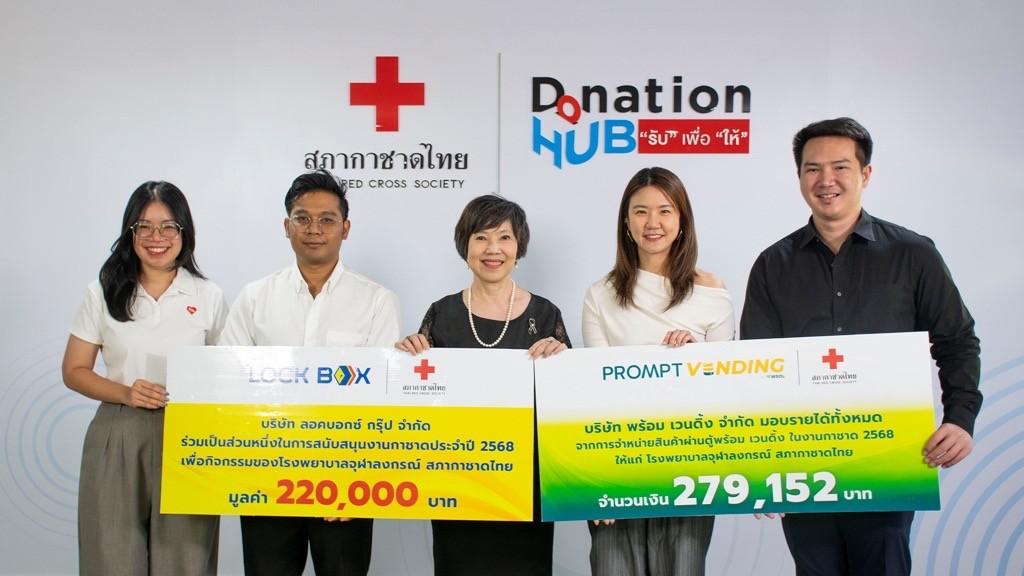
Prompt Vending Co., Ltd. and Lockbox Group Co., Ltd., in collaboration with the Thai Red Cross Society, carried out the “Sharing Cabinet for Red Cross Fundraising” project. Proceeds from product sales through vending machines, together with financial contributions from Lockbox at Lumpini Park during the 2025 Thai Red Cross Fair (11–21 December 2025), were donated in full, without deduction of expenses, to King Chulalongkorn Memorial Hospital, Thai Red Cross Society.
Ms. Nopparon Tangjitpiyanan (Chief Business Officer – B2C) represented Prompt Vending in presenting proceeds totaling Baht 279,152, while Mr. Parames Wisetkarn (Managing Director) represented Lockbox in presenting a contribution of Baht 220,000.
2. Southern Flood Relief Campaign
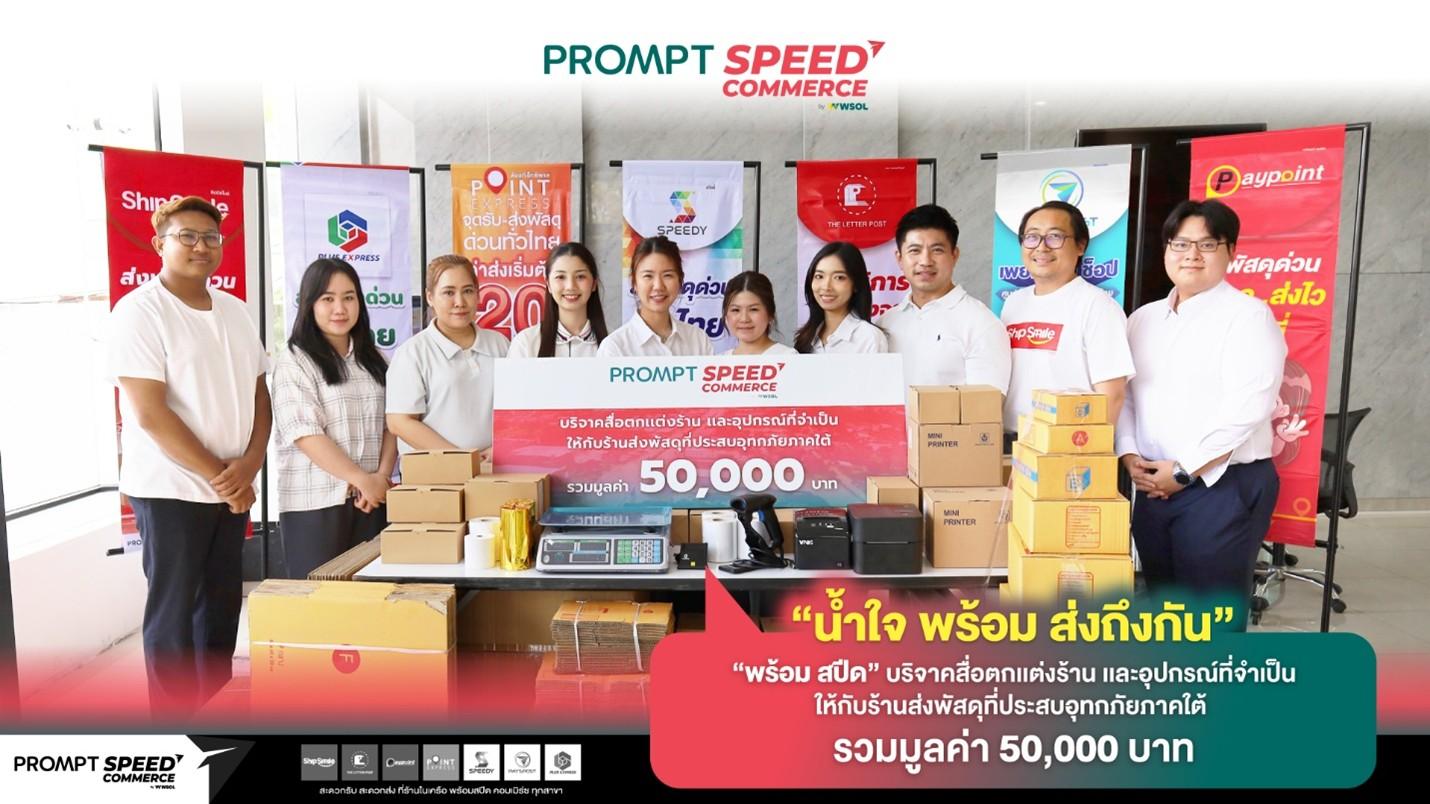
Prompt Speed supported flood-affected parcel service shops in Southern Thailand by donating store decorative materials and essential equipment necessary for business operations, with a total contribution value of Baht 50,000.
3. Development of an Intoxication Screening Test on Vending Machines
This project represents an enhancement of the Company’s social responsibility efforts in collaboration with business partners in the sale of alcoholic beverages. It serves as a model of Responsible Retail innovation for the vending machine industry in Thailand. The Company introduced an “Intoxication Screening Test” feature on vending machine screens, enabling customer screening prior to the purchase of alcoholic beverages. This initiative aims to mitigate regulatory risks and enhance consumer safety by promoting responsible purchasing behavior.
Law Violation Incidents
Law Violation Incidents
| Metric | Current Year | Previous Year | Two Years Ago |
|---|---|---|---|
| The total number of cases or incidents of significant violations of laws or regulations regarding social and human rights (Cases) | 0 | 0 | 0 |
| The total number of cases or incidents that cause significant labor disputes (Cases) | 0 | 0 | 0 |
| The total number of cases or complaints related to consumer rights violations (Cases) | 0 | 0 | 0 |
| The total number of cases or complaints related to partner rights violations (Cases) | 0 | 0 | 0 |
| The total number of cases or incidents that cause disputes with the community/society (Cases) | 0 | 0 | 0 |
| The total number of cases or incidents related to cyber security or customer data breaches (Cases) | 0 | 0 | 0 |
| The total number of cases or incidents related to safety and occupational health at work (Cases) | 0 | 0 | 0 |